



- By lilydalemotors
- 13th November 2026
What Causes Torque Converter Shudder at Partial Throttle
Few things feel more unsettling than a car that vibrates gently at light throttle. Many drivers describe the sensation as driving over rumble strips. Often, the culprit is torque converter shudder, a problem most noticeable at partial throttle. It typically happens between 30 and 50 mph, when the transmission is working to hold a steady speed. Left unchecked, the vibration can wear internal parts and lead to expensive transmission damage. Understanding the causes helps you act early. Professional brake and clutch repair in Chirnside Park can diagnose the source quickly, whether it comes from the converter, the fluid, or related driveline components.
How the Torque Converter Works
The torque converter connects the engine to the automatic transmission using fluid. At low speeds, it multiplies torque and lets the engine idle while the car is stopped. At cruising speeds, a lock-up clutch inside the converter engages, creating a direct mechanical link that improves fuel economy and reduces heat.
Why Lock-Up Clutch Operation Matters
Shudder usually occurs when the lock-up clutch partially engages or slips instead of gripping firmly. Under light acceleration, the clutch must hold while engine load fluctuates. If the friction material is worn, glazed, or contaminated, it grabs and releases rapidly. That repeated cycle creates a shaking sensation felt through the seat and floor. A faulty lock-up solenoid or low hydraulic pressure can cause the same effect by applying the clutch unevenly. A qualified technician offering brake and clutch repair in Chirnside Park can test clutch engagement, check hydraulic pressure, and confirm whether the converter needs service.
Transmission Fluid Condition
Fluid is the most common and most overlooked cause. Over time, heat breaks down the friction modifiers in automatic transmission fluid, changing how the clutch grips. Dirty, burnt, or degraded fluid leads to inconsistent engagement and shudder. Using the wrong fluid type is equally damaging, since modern transmissions are engineered for specific friction characteristics. Warning signs include dark colour, a burnt smell, and metal particles on the dipstick or pan. A fluid and filter service often resolves early-stage shudder, though neglected fluid may leave the clutch permanently damaged.
Vibration Under Light Acceleration
Because the lock-up clutch engages most often during gentle throttle, vibration appears when you ease onto the accelerator. Pressing harder usually changes the load, and the shudder fades, which helps separate it from other issues. Engine misfires, worn motor mounts, unbalanced tyres, and failing U-joints can feel similar, so proper diagnosis matters. A scan tool can reveal converter slip and lock-up commands, while a road test confirms when the vibration occurs.
Brake and Clutch Repairs Matter
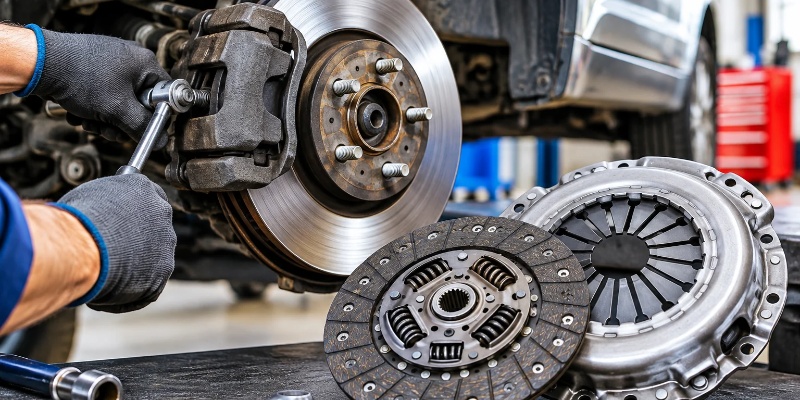
Not every vibration comes from the converter itself. Warped brake rotors, sticking callipers, and worn driveline parts can mimic shudder, so a complete inspection should include brake & clutch repairs where needed. On manual vehicles, a worn clutch disc, damaged flywheel, or weak pressure plate causes similar shaking. In automatics, internal clutch pack wear or a failing converter clutch may require rebuilding or replacement. Timely brake and clutch repairs stop minor vibration from becoming complete transmission failure.
Torque converter shudder is a warning, not a quirk. Fluid condition, lock-up clutch operation, and related mechanical wear all play a role. Pay attention to vibration under light acceleration, and have it checked promptly.
Lilydale Motors is licensed as VICRoad Roadworthy Tester. Our chief service areas are brake and clutch repairs, engine tuning, cooling system repair and more. Stay tuned to our blogs for more information.